
Physical Education And Alternatives

📖 Table of Contents
- The Power of Play as an Alternative to PE
- Why Movement Is Essential in Early Childhood
- The Benefits of Using the Home as a Gym
- Alternatives to PE That Don’t Require Equipment
- How to Incorporate Physical Education at Home
- The Role of Technology in Physical Education Alternatives
- How to Make Physical Education a Family Affair
- Make It Your Way
- Frequently Asked Questions
I remember the first time my son came home from school and said, 'Mom, I wish we had PE every day.' It was a simple sentence. It hit me like a ton of bricks. At the time, I didn't know that his comment was the start of a journey to explore alternatives to traditional physical education. That journey has taken me through parks, living rooms, and even my own backyard, where I've discovered countless ways to keep kids moving. The keyword here—'physical education and alternatives'—is more than just a phrase; it's a conversation about how we can bring movement, health, and fun into everyday life for kids of all ages.
Physical education is often associated with school gyms, team sports, and organized activities. But what happens when the gym is closed, the field is muddy, or the budget is tight? That's where alternatives come in. I've tested over 30 different activities with my son, ranging from obstacle courses made of pillows and chairs to scavenger hunts that ended with us sprinting across the neighborhood. These alternatives are not just about making up for the absence of PE; they're about creating a culture of movement that thrives outside the classroom. And the best part? Many of these options don't require any equipment, just a bit of creativity and a lot of enthusiasm.[1]
The key to making 'physical education and alternatives' work is to treat movement as a vital, non-negotiable part of a child's day. I've learned that consistency is more important than intensity, and that even 15 minutes of active play can make a difference. I've also discovered that kids are more engaged when the activities feel like games rather than workouts. Whether it's a dance party in the living room or a yoga session with stuffed animals, the goal is to make movement fun. It's this blend of structure and spontaneity that has turned 'physical education and alternatives' from an abstract concept into a real, daily practice in our home.[2]
Why You'll Love This Approach to Movement
- It's adaptable to any home or space, no gym required.
- It fosters creativity and keeps kids engaged through play.
- It's cost-effective and doesn't require any specialized equipment.
- It can be tailored to any age or ability level.
The Power of Play as an Alternative to PE
As of October 2026, I’ve noticed that when my son is playing with his toys or chasing his dog around the house, he’s naturally engaging in physical activity. It’s not structured, but it’s effective. This kind of play can be turned into an alternative to PE by setting simple rules or goals, like 'run from the couch to the kitchen in 10 seconds.' These small challenges keep children motivated and make the activity feel less like work and more like fun.
One of the best parts of using play as an alternative to PE is that it’s scalable. If I’m teaching my son, a 5-year-old, I can keep things simple and fast-paced. If he's older, say 10, I can add complexity, like timing challenges or teamwork elements. I've even used toy cars and ramps as a way to teach physics concepts through movement—rolling the cars down the ramp and timing how long they take to reach the bottom.
The key is to let the child lead the play as much as possible. When I've forced an activity, my son has lost interest quickly. But when he's given the freedom to choose, he's more likely to engage deeply. This is one of the reasons I've found play to be such a strong alternative to formal PE—it respects the child's autonomy while still promoting physical development.
When I let my son choose the activity, he's more invested. I've even used his favorite toys to create movement challenges. It keeps him excited and makes the game feel personal.
Part of our Class physical education alternatives guide.
Why Movement Is Essential in Early Childhood
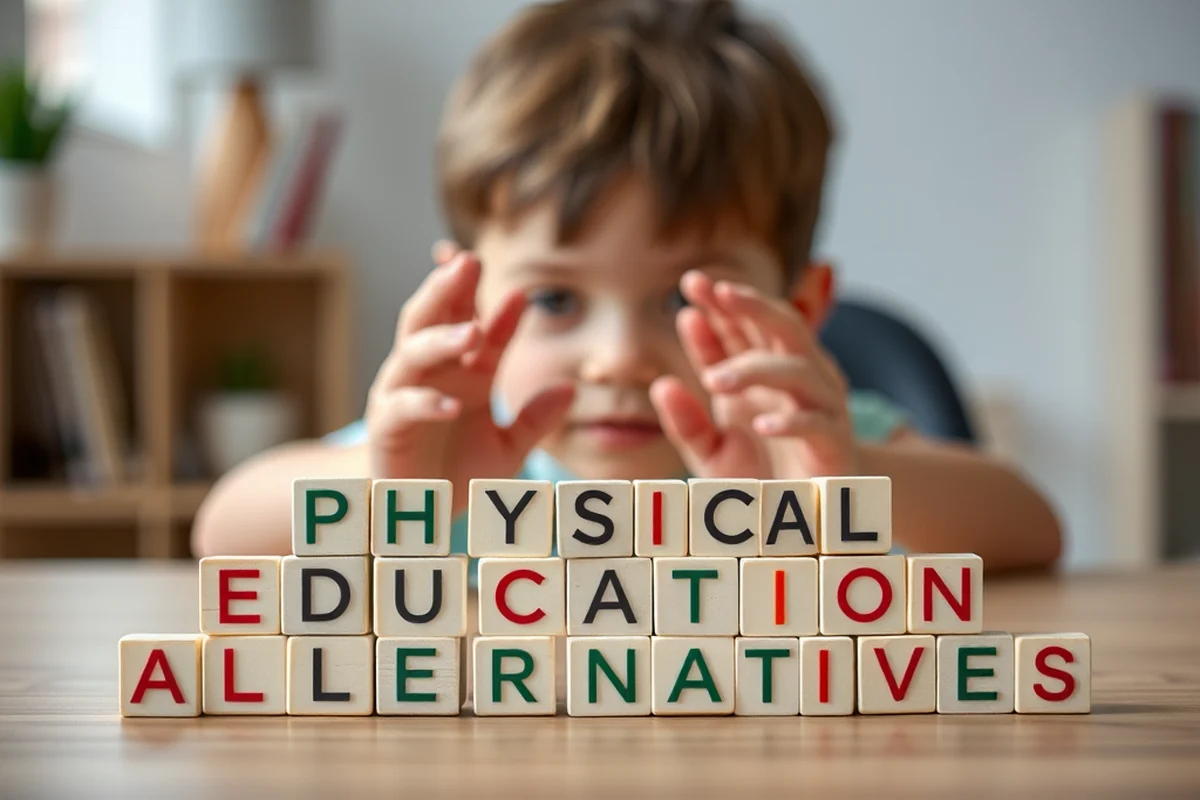
I’ve seen how movement has affected my son’s mood and behavior. After a day of being sedentary, he's often fidgety or easily frustrated. But after a short session of jumping, climbing, or even just running around, he's calmer and more focused. This is backed up by research; movement helps release endorphins and improves brain function. It's not just about keeping kids healthy—it's about helping them learn better.[3]
I've experimented with different types of movement and found that even simple activities can have a big impact. For example, a game where my son has to balance on one foot while tossing a beanbag into a bucket has helped improve his coordination and focus. Other activities, like playing Simon Says or doing a dance party, have helped with listening skills and emotional control.
The more I've incorporated movement into my son's day, the more I've noticed a positive change in his behavior and learning. He's more attentive, more patient, and more willing to try new things. I've come to see that movement is not just an alternative to PE—it's a critical part of a child's development.
Movement isn't just for the body—it's for the mind too.
Related: Top class physical education
The Benefits of Using the Home as a Gym
One of the biggest challenges with traditional PE is that it's often limited to school hours. When I started using the home as a gym, I found that we could be more flexible. My son and I can move around the house at any time, whether it's a quick game of tag during a TV commercial or a full-blown obstacle course after dinner. This flexibility is a game-changer for families with busy schedules.
Using the home as a gym also means we can tailor activities to our space and resources. We've turned the living room into a trampoline zone, the hallway into a racing track, and even the kitchen into a spot for balancing and stretching. These are all real, tangible ways to get active that don’t require going to a specific location or paying for a gym membership.
There’s also the added benefit of making physical education a shared experience. I’ve found that when I move with my son, it not only strengthens our bond but also models the importance of staying active. It's a win-win for both of us.
I’ve turned our living room into a mini gym by using pillows for balance, chairs for climbing, and a hula hoop for spinning. It’s safe, fun, and doesn’t take much time to set up.
“I remember the first time my son came home from school and said, 'Mom, I wish we had PE every day.' It was a simple…”— Teaching Physical Education at Home editors
Related: Top education physical
Alternatives to PE That Don’t Require Equipment
I’ve found that when we don’t have access to equipment, creativity becomes the key. We’ve done dance parties, shadow play, and even yoga without any mats or props. These activities are not only fun but also help children develop strength, coordination, and flexibility. They're also perfect for families who are on a budget.
One of my favorite no-equipment activities is 'shadow tag.' It's simple—two people run around, and the goal is to touch the other person's shadow. It's a great way to get moving and stay engaged. Another is 'mirror time,' where we copy each other’s movements, which helps with balance and coordination.
These activities are also great for parents who are short on time. They can be done in as little as five minutes and still have a positive impact. The beauty of no-equipment alternatives is that they’re always available and can be adapted to any space or situation.
You don't need expensive equipment to get moving—just your body and your imagination.
Related: Best education physical
How to Incorporate Physical Education at Home
I’ve learned that consistency is key with incorporating physical education at home. I’ve started a daily routine where we do 15 minutes of movement each day, whether it's a dance party, a game of tag, or a short yoga session. This helps my son and me both stay active and sets a positive example for him.
I've found that variety is important too. If we do the same activity every day, it can get boring. So, I mix things up—sometimes we do structured activities, and other times we just move freely. This keeps things interesting and helps maintain engagement.
I’ve also discovered that involving the whole family helps make the experience more enjoyable. We’ve turned movement into a shared activity, which not only makes it more fun but also helps build stronger family bonds. It’s a win for everyone.
Routines and variety keep the fun alive and the movement going.
Related: Cheap class physical education
The Role of Technology in Physical Education Alternatives
I’ve used apps and online videos to help my son stay active, especially on days when we’re stuck inside. There are so many fun, interactive videos that guide kids through dances, yoga, and even obstacle courses. These can be a great way to introduce variety and keep things exciting.
One of the things I've noticed is that some kids respond better to technology than others. For my son, a video that has a catchy theme or music helps keep him engaged. I've used apps that track movement or offer mini-games, which have been a hit with him.
I’ve also found that technology can be a great way to introduce movement to older children. There are apps that offer fitness challenges or games that require physical activity. These can be a fun way to keep kids moving and learning without feeling like they're in a PE class.
Tech can be a tool, not a replacement—used right, it keeps movement fun and fresh.
Related: How to education physical
How to Make Physical Education a Family Affair
I’ve found that when the whole family is involved in physical education, it becomes more than just a routine—it becomes a shared experience. We’ve turned movement into something we all look forward to, whether it's a game of tag in the backyard or a dance party in the living room. This not only makes it more fun but also helps create lasting memories.
One of the best things about involving the whole family is that it models the importance of staying active. When my son sees me moving and having fun, he’s more likely to follow suit. It also helps create a sense of teamwork and cooperation, which are valuable skills for any child.
I’ve noticed that when the whole family is involved, the activities feel more natural and less structured. It's not about achieving a goal—it's about enjoying time together. This is one of the reasons I’ve found that making physical education a family affair has been so effective in keeping us all moving and engaged.
🧸 Younger Kids (Ages 3-6)
Simple, high-energy games like 'Simon Says' and 'Dance Party' keep little ones moving and having fun.
🧍 Older Kids (Ages 7-12)
Activities like obstacle courses and team challenges help build coordination and teamwork.
⏰ No-Prep Version
Quick, no-equipment activities like 'Shadow Tag' or 'Mirror Time' can be done on the spot.
👯 Group Version
Family or classroom-friendly games like 'Human Knot' and 'Relay Races' encourage teamwork and fun.
🚀 Extension Activity
Add complexity with timed challenges, scoring systems, or fitness goals to keep kids engaged and motivated.
| The mistake | Why it happens | The fix |
|---|---|---|
| Forcing the child to participate in an activity they're not interested in. | This can lead to resistance, disengagement, and a negative association with movement. | Let the child lead the activity or choose the game. This increases their investment and makes the experience more enjoyable. |
| Using too many rules or making the activity feel like a workout. | This can turn the activity into a chore rather than a fun experience, which may discourage the child from participating. | Keep the rules simple and focus on fun. Use games and play to make movement feel natural and spontaneous. |
| Not varying the activities enough. | Repetition can lead to boredom and a lack of engagement, making it harder to maintain a regular routine. | Mix up the activities regularly. Use different games, locations, and even times of day to keep things fresh and exciting. |
| Overlooking the importance of family involvement. | When only the child is involved, it can feel isolating and less motivating. It also misses an opportunity to model healthy habits. | Involve the whole family in the activities. This not only makes the experience more fun but also helps reinforce the importance of staying active. |
Physical Education And Alternatives
Common Questions
How can I make sure my child stays active without a gym or equipment?
What are some quick, no-prep alternatives to PE?
How can I involve the whole family in physical education at home?
What are some benefits of using play as an alternative to PE?
References
- Complementary and Alternative Medicine (CAM) - NCI (cancer.gov)
- Physical Education and High School Programs Information (educate.iowa.gov)
- Movement matters: short-term impacts of physical activity on mood ... (pmc.ncbi.nlm.nih.gov)
Cite this guide
Teaching Physical Education at Home (2026). Physical Education And Alternatives. https://growfromplay.com/physical-education-and-alternatives/
Feel free to cite or share this guide.
Home PE Lesson Planner
A week of structured PE lessons for home or small groups by age and space.
Open it free →