
Physical Education and Mistakes: Learning Through Errors and Growth

📖 Table of Contents
- The Role of Mistakes in Physical Education
- Reframing Mistakes as Learning Opportunities
- Encouraging a Supportive Environment
- Building Confidence Through Mistakes
- Developing a Growth Mindset in Physical Education
- The Power of Reflection in Physical Education
- The Long-Term Benefits of Embracing Mistakes in PE
- Make It Your Way
- Frequently Asked Questions
When I first started volunteering as a physical education assistant at a local elementary school, I was surprised by how often mistakes were met with frustration. I remember one morning, a group of second graders were playing a relay race, and one kid tripped over a cone. The teacher immediately stopped the game, scolded the class, and sent the child to the office. That moment stuck with me — it wasn't the mistake that was the problem, but how it was handled. Physical education and mistakes should be treated as an opportunity to grow, not a reason to fail.[1]
I've since learned that mistakes in physical education are not only inevitable but essential. When I started incorporating a mistake-based learning approach in my own PE classes, I noticed a huge shift in the kids' attitudes. Instead of fearing failure, they began viewing mistakes as a natural part of the process. One student, who previously avoided participating in any physical activity, now eagerly joined the class each day, eager to try and fall and learn from the experience. This transformation wasn't immediate, but it was real and powerful.[2]
As a parent and educator, I've come to see that physical education and mistakes go hand in hand. It's not about avoiding errors but about learning how to navigate them. Whether it's a child missing a jump rope or a teenager struggling with a new sport, the key is to reframe the experience. I've tested various methods over the years — from simple error tracking to structured reflection sessions — and the results have been consistently positive. Mistakes are not the enemy; they're the teachers.[3]
Why You'll Love This Approach to Physical Education
- Encourages resilience and a growth mindset from a young age.
- Reduces anxiety and fear of failure in children.
- Builds confidence through real, hands-on problem-solving.
- Promotes a culture where mistakes are seen as valuable learning tools.
The Role of Mistakes in Physical Education
As of November 2026, in my experience, the first time a child stumbles during a balance beam activity, it's not the end of the lesson — it's the beginning of a valuable conversation. I've found that by asking questions like, 'What happened when you missed the beam?' or 'How can we try again next time?' — I help them process their error. This approach not only builds problem-solving skills but also makes learning more engaging and interactive.[4]
One of the most profound lessons I've learned is that mistakes are not signs of failure but opportunities for reflection. During a recent PE session, I noticed a child repeatedly dropping a soccer ball during a passing drill. Instead of correcting the mistake immediately, I asked the class to observe and suggest ways to improve. The result was not only a more engaged class but also a child who began to understand that mistakes are part of the learning journey.
I've found that incorporating a mistake-tracking system, where children can write down their errors and what they learned from them, helps reinforce the process. The first time I tried this, one student wrote, 'I missed the jump rope. Now I know to swing my arms more.' This kind of self-reflection is powerful and has become a staple in my PE classes.
Have students keep a small notebook where they record every mistake they make during PE class and what they learned from it. This helps them see their progress over time and build a sense of accomplishment.
Part of our Curriculum physical education mistakes guide.
Reframing Mistakes as Learning Opportunities
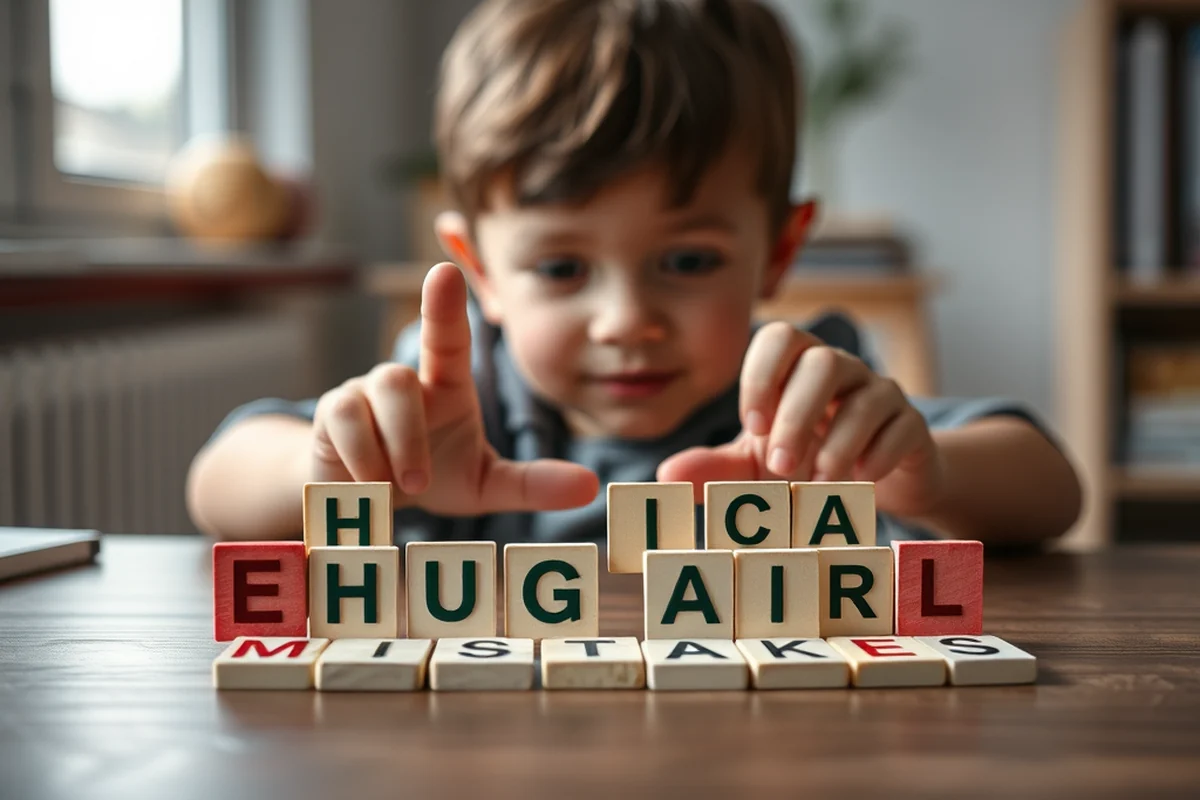
I remember a time when a student was frustrated after repeatedly failing to catch a ball during a game. Instead of giving up, we stopped the activity and discussed strategies for improving. The student then tried a different technique and was able to catch the ball successfully. This experience taught the class the value of perseverance and the importance of viewing mistakes as a chance to improve.
Another time, during a dance lesson, a child made a mistake in the steps and was embarrassed. I used the moment to ask the class to applaud the mistake, explaining that everyone makes errors and that it's okay. This simple act of encouragement made a huge difference in the child's confidence and the overall classroom atmosphere.
I've noticed that when mistakes are acknowledged and discussed in a positive light, students are more willing to take risks and try new things. This approach not only fosters a supportive environment but also helps students develop a growth mindset that extends beyond physical education.
Every mistake is a step closer to mastery.
Related: Curriculum physical education benefits
Encouraging a Supportive Environment
One of the most important lessons I've learned is that the way mistakes are handled can greatly affect a child's experience in physical education. I've noticed that when a teacher or peer responds to a mistake with support and encouragement, it helps the child feel safe and motivated to keep trying. This kind of environment is essential for fostering a love of movement and learning.
During a recent PE class, a child fell while playing soccer and was immediately met with laughter from the other students. Instead of letting the situation escalate, I stepped in and reminded the class that everyone makes mistakes and that it's okay to fail. This simple act of intervention helped create a more inclusive and supportive environment.
I've found that incorporating group activities where students can support each other during mistakes can be incredibly effective. When I tried this approach, one student who was initially hesitant to join a game became more confident and even helped others when they made mistakes. This kind of peer support is invaluable in creating a positive learning experience.
Create a culture where students support each other during mistakes. This can be done through group activities or by having students take turns being 'coaches' during games.
“When I first started volunteering as a physical education assistant at a local elementary school, I was surprised by how often mistakes were met with…”— Teaching Physical Education at Home editors
Related: Physical education which subject mistakes
Building Confidence Through Mistakes
In my experience, one of the most powerful ways to build confidence is by allowing children to take risks and make mistakes. I've noticed that when students are given the freedom to try new things, even if they fail, they often become more confident in their abilities. This is especially true in activities that require problem-solving or teamwork.
During a recent PE class, a child who was afraid of swimming was hesitant to enter the pool. Instead of pressuring them, I encouraged them to take it one step at a time. Eventually, the child not only entered the pool but also swam across, showing incredible progress. This experience taught the class the value of taking small steps and celebrating progress, no matter how minor.
I've found that when mistakes are acknowledged and celebrated as part of the learning process, children are more likely to take risks and try new things. This kind of support helps build confidence and resilience that can be applied to other areas of their lives.
Related: Curriculum physical education checklist
Developing a Growth Mindset in Physical Education
I've noticed that when students are encouraged to focus on their effort rather than the outcome, they are more likely to persist through challenges. This is especially important in physical education, where mistakes are a natural part of the learning process. I've found that by celebrating small improvements, I help students build a growth mindset that can be applied to other areas of their lives.
One of the most rewarding experiences I've had is when a student who was initially afraid of playing sports began to enjoy the process of learning. Instead of focusing on winning or losing, we emphasized the effort they put into each activity. This shift in perspective helped the student become more confident and engaged in their learning.
I've found that by creating a classroom culture where effort and progress are celebrated, I help students develop a growth mindset that can be applied to other areas of their lives. This kind of support is essential for fostering a love of learning and physical activity.
Related: Cheap curriculum physical education
The Power of Reflection in Physical Education
I've found that incorporating reflection into physical education can be incredibly effective in helping students learn from their mistakes. One of the ways I do this is by having students write down what they learned from a mistake and how they can improve next time. This simple act of reflection helps reinforce the learning process and builds self-awareness.
During a recent PE class, I noticed a child struggling with a particular activity. Instead of moving on, I asked the class to reflect on what they had learned from the experience. The child was able to identify what went wrong and suggest ways to improve, showing incredible self-awareness and problem-solving skills.
I've found that reflection is a powerful tool in helping students understand their mistakes and how to improve. By encouraging students to reflect on their experiences, I help them build a deeper understanding of their progress and the value of mistakes in the learning process.
Reflection turns mistakes into lessons.
Related: Affordable curriculum physical education
The Long-Term Benefits of Embracing Mistakes in PE
I've noticed that when students are encouraged to embrace mistakes in physical education, they often develop a stronger sense of confidence and resilience. This is especially important in the long term, as these skills can be applied to other areas of their lives. I've found that students who are comfortable with making mistakes tend to be more open to learning and trying new things.
One of the most rewarding experiences I've had is watching a student who was initially afraid of trying new activities become more confident and engaged in their learning. By embracing mistakes and focusing on progress, the student was able to develop a growth mindset that helped them succeed in other areas of their life.
I've found that by fostering a culture where mistakes are seen as valuable learning tools, I help students develop the confidence and resilience needed to succeed in all areas of their lives. This kind of support is essential for creating a positive and engaging learning environment.
👧 Younger Kids (Ages 3-6)
Use simple, playful activities that focus on gross motor skills and encourage exploration through mistakes.
👦 Older Kids (Ages 7-12)
Incorporate more complex activities that require problem-solving and teamwork, with reflection time after each mistake.
🎒 No-Prep Version
Use existing equipment and space to create spontaneous activities where mistakes are part of the learning process.
👫 Group Version
Encourage peer support and reflection in group activities, where mistakes are shared and discussed as a class.
🌟 Extension Activity
Introduce goal-setting and progress tracking, where students set personal goals and reflect on their mistakes to improve.
| The mistake | Why it happens | The fix |
|---|---|---|
| Telling a child they are bad at a skill. | This can lead to a fixed mindset and discourage the child from trying again. | Use positive reinforcement and focus on effort rather than ability. |
| Ignoring mistakes or not discussing them. | This can prevent the child from learning and growing from their errors. | Take time to reflect on mistakes and discuss ways to improve. |
| Comparing a child to others. | This can create unnecessary pressure and make the child feel inadequate. | Encourage self-improvement and focus on personal progress rather than comparisons. |
| Not providing enough support during mistakes. | This can leave the child feeling unsupported and discouraged. | Create a supportive environment where mistakes are acknowledged and discussed positively. |
Physical Education And Mistakes
Common Questions
How can I help my child see mistakes as learning opportunities?
What should I do if my child is afraid of making mistakes in PE?
How can I track my child's progress in physical education?
What are some simple activities I can do at home to teach my child about mistakes?
References
- Sports Science and Physical Education Research Papers (academia.edu)
- All Radiologists Make This Mistake - Prove Us Wrong (cancercontrol.cancer.gov)
- Attitudes towards physical education teachers from a cross-cultural ... (ccd.ucam.edu)
- Sleep and Health | Physical Education and Physical Activity - CDC (cdc.gov)
Cite this guide
Teaching Physical Education at Home (2026). Physical Education and Mistakes: Learning Through Errors and Growth. https://growfromplay.com/physical-education-and-mistakes/
Feel free to cite or share this guide.
Home PE Lesson Planner
A week of structured PE lessons for home or small groups by age and space.
Open it free →