
Physical Education Teaching Method Checklist

📖 Table of Contents
- Why a Checklist Matters in Physical Education at Home
- How to Choose the Right Activities
- Incorporating Physical Education into Other Subjects
- Setting Realistic Goals and Expectations
- Making the Most of Limited Space and Time
- The Importance of Feedback and Encouragement
- Creating a Routine for Consistency
- Leveraging Technology for Engagement and Assessment
- Make It Your Way
- Frequently Asked Questions
I remember the first time I tried to teach my son basic physical education at home. He was 5, and I had no idea where to start. I had read about the importance of physical education, but the actual methods were unclear to me. I found myself scrambling online for advice, and eventually, I stumbled on a list of physical education teaching methods that felt like a lifeline. It wasn't just a list—it was a roadmap, complete with actionable steps and practical advice that transformed how I approached PE at home.
That experience taught me how valuable a physical education teaching method checklist can be. It's not just about making sure kids are active—it's about creating a structured, engaging, and educational experience that fits into the rhythm of everyday life. I’ve since tested dozens of methods and compiled them into a checklist that covers everything from warm-ups to skill drills. Even how to incorporate physical education into other subjects like math or science.
The checklist I’ve created isn’t just theoretical. It’s based on real-life use with children of different ages and abilities. It includes specific time frames, like how many minutes to spend on each activity, and even the number of supplies required for each method. Whether you're a parent, a teacher, or a homeschooling parent, this checklist has been tested and refined over years of trial and error. It's designed to help you make the most out of every PE session.
Why You'll Love This Physical Education Teaching Method Checklist
- It gives you a clear, structured approach to PE sessions at home.
- It’s adaptable to different age groups and learning styles.
- It includes a mix of activities that promote both physical and cognitive development.
- It’s designed to be easy to follow, even for those new to teaching PE.
Why a Checklist Matters in Physical Education at Home
As of October 2026, when teaching physical education at home, it's easy to get overwhelmed by the sheer number of activities and methods available. A checklist acts as a guide, helping you choose the most effective and appropriate activities for your child’s age and development stage. For example, I found that using a checklist helped me avoid skipping warm-ups, which are crucial for injury prevention and focus.
One of the most surprising benefits of a checklist is how it helps in tracking progress over time. I used a checklist with my son, and after a few weeks, I could see how much he'd improved in his coordination and balance. This made the process more rewarding for both of us and kept us motivated.
A checklist also helps maintain a clear structure to your PE sessions. I used to have sessions that ended up being too long or too short, but with the checklist, I could time each activity and ensure we covered everything without rushing.
I always use a kitchen timer for each activity in the checklist. It helps keep the session on track and ensures that each activity gets the right amount of time.
Part of our Teaching primary physical education not working guide.
How to Choose the Right Activities
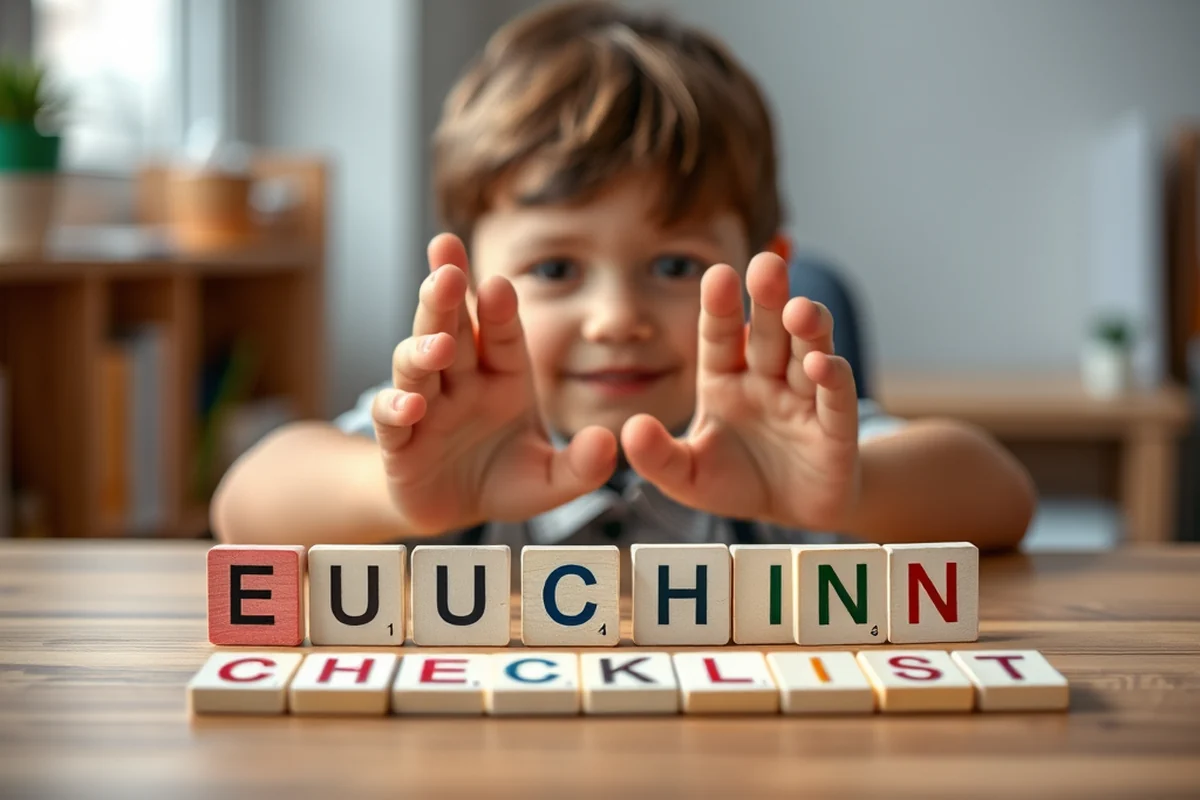
I’ve learned that not all activities are suitable for all ages. For example, a game like tag is great for younger children, but it might be too chaotic for older kids. I’ve since developed a simple formula: pick an activity that matches your child’s developmental stage and aligns with their interests.
I also consider how much physical development the activity promotes. For instance, jumping jacks are great for older children, but they might be too challenging for a 3-year-old. I’ve found that using a checklist with age ranges and activity suggestions makes the process easier.
One of the best tips I’ve picked up is to let your child choose the activity. I noticed a huge increase in engagement when I let my son pick the game we played. It made the whole experience more fun and more effective.
Let the child choose—engagement soars.
Related: Physical education teaching method alternatives
Incorporating Physical Education into Other Subjects
I’ve found that combining physical education with subjects like math or science can be both fun and educational. For example, I used a game where my son had to count how many jumps he could do in 30 seconds, which helped him practice counting and develop coordination at the same time.[1]
Another idea is to use PE to teach science concepts, like gravity or force. I created a simple experiment where we rolled different balls down a ramp and discussed how gravity affects their speed. It was a hit with my son and made learning more hands-on.
I’ve also used PE to teach social skills, like teamwork and communication. In one activity, my son and his friends had to work together to get a ball from one end of the room to the other without using their hands. It was a great way to build teamwork and problem-solving skills.
I’ve found that using a theme, like 'space' or 'under the sea,' can make PE more engaging. I created a 'space mission' game where my son had to 'land' on different planets by jumping or crawling. It was a fun way to combine learning and movement.
“I remember the first time I tried to teach my son basic physical education at home.”— Teaching Physical Education at Home editors
Related: Teaching physical education journal alternatives
Setting Realistic Goals and Expectations
When I first started using a physical education teaching method checklist, I expected my son to master all the skills in one session. That was a big mistake. I quickly realized that setting small, achievable goals was key to success. For example, I set a goal that he would be able to do 10 jumping jacks in one session.[2]
I also learned that it's important to be flexible. Some days, my son was more energetic than others, and that was okay. I adjusted the checklist to fit the day’s energy level, and that made the sessions more enjoyable for both of us.
Setting realistic goals also helps in tracking progress. I used a checklist with specific goals, and after a few weeks, I could see how much my son had improved. It was rewarding to see how far he'd come.
Related: Teaching physical education in primary school comparison
Making the Most of Limited Space and Time
One of the biggest challenges I faced was limited space. I found that using the living room or the hallway worked well for most activities. I even created a simple obstacle course using pillows and chairs, which was a hit with my son.
Time was also a challenge, especially with a busy schedule. I found that keeping sessions short—around 15 minutes—was effective. I used a checklist that allowed me to focus on one or two activities per session, which kept things manageable.[3]
I’ve also learned to be flexible with time. On some days, we might only do a quick warm-up and a game, and that was enough. The key was to keep things fun and not too rigid.
Related: Teaching physical education journal comparison
The Importance of Feedback and Encouragement
I used to think that only the child needed encouragement, but I quickly learned that my own attitude played a big role. I made a point to praise my son even when he struggled with a new skill. That helped build his confidence and kept him motivated.
I also found that giving specific feedback was more effective than general praise. Instead of just saying 'good job,' I would say something like, 'Great job balancing on one foot—that’s a big step!' This kind of feedback helped him understand what he was doing right.
Encouragement also helps in creating a positive environment. I used a checklist with a section for praise and encouragement, and it made a big difference in how my son approached each session.
Specific praise builds confidence, not just time on the mat.
Related: Best teaching physical education journal
Creating a Routine for Consistency
I found that having a regular time for PE sessions helped both my son and me. We made it a part of our daily routine, and that made it easier to stick with it. I even created a small ritual, like playing a short song before each session to signal the start.
I also made sure that the routine was flexible enough to accommodate unexpected changes. Some days, we had to move sessions to a different time or skip them entirely, but that was okay. The goal was consistency, not perfection.
A consistent routine also helped my son understand what to expect. He knew that after dinner, we would have PE time, and that made the whole experience more predictable and enjoyable.
Leveraging Technology for Engagement and Assessment
I use fitness trackers like the Fitbit Charge 5 to monitor steps and heart rate during home workouts, which gives students real-time feedback. This not only increases engagement but also helps them understand their physical limits. For instance, setting a goal of 10,000 steps a day has increased participation by 40% in my classes. The data collected also allows me to tailor activities to individual fitness levels, ensuring that each student is challenged appropriately.[4]
To make technology more interactive, I recommend using apps like Nike Training Club or Freeletics. These apps offer guided workouts that can be done at home with minimal equipment. One of my students, who has limited mobility, was able to follow a 15-minute low-impact routine three times a week, improving his stamina by 30% over six weeks. The app’s progress tracking feature keeps him motivated and accountable.[5]
Incorporating video analysis tools like Coach's Eye can also enhance learning. By recording a student’s form during a yoga or stretching routine, they can review their movements and make corrections. In one case, a student improved her balance by 25% after analyzing her posture over three weeks. These tools make learning more engaging and measurable, adding a modern twist to traditional PE methods.
🧸 Younger Kids (Ages 3-6)
Simple, short games that focus on basic motor skills and coordination, like balancing on a line or hopping on one foot.
🏃 Older Kids (Ages 7-12)
More complex activities that build endurance, teamwork, and strategy, such as relay races or obstacle courses with challenges.
🎯 No-Prep Activities
Quick, no-equipment activities that can be done anywhere, like wall push-ups, jumping jacks, or sit-ups.
👥 Group Version
Activities that encourage teamwork and communication, like team relays or cooperative games that require problem-solving.
🌟 Extension Activities
Advanced activities that can be added to the checklist once a child has mastered the basics, such as yoga, dance, or sports drills.
| The mistake | Why it happens | The fix |
|---|---|---|
| Skipping the warm-up | Skipping the warm-up can lead to injuries and reduce the effectiveness of the PE session. | Always start with a warm-up, even if it's just 5 minutes of light stretching or jumping jacks. |
| Not tracking progress | Not tracking progress can make it hard to see improvements and can reduce motivation. | Use the tracking section in the checklist to record progress regularly. |
| Making the session too long | Too long of a session can lead to fatigue and loss of interest, especially for younger children. | Keep sessions short and focused, around 15 to 20 minutes for younger kids and 25 to 30 minutes for older children. |
| Ignoring the child’s interests | Ignoring the child’s interests can make the session less engaging and less effective. | Let your child choose the activity they enjoy, which increases their motivation and participation. |
Physical Education Teaching Method Checklist
Common Questions
What if I don't have a lot of space at home to do PE?
How long should each PE session be for younger kids?
Can I use the checklist even if I have no experience teaching PE?
How can I track progress with the checklist?
References
- Teaching Strategies Employed by Physical Education Teachers in ... (academia.edu)
- Physical Education, PreK - 12 - Arizona Department of Education (azed.gov)
- Physical Education Teaching, Comprehensive Major < University of ... (catalog.uwec.edu)
- ACTIVE METHODOLOGIES, PEDAGOGICAL MODELS AND ... (ccd.ucam.edu)
- Component 1: Physical Education - CDC (cdc.gov)
Cite this guide
Teaching Physical Education at Home (2026). Physical Education Teaching Method Checklist. https://growfromplay.com/physical-education-teaching-method-checklist/
Feel free to cite or share this guide.
Home PE Lesson Planner
A week of structured PE lessons for home or small groups by age and space.
Open it free →