
Education Physical Book Examples

📖 Table of Contents
- The Power of Touch in Learning
- How to Pick the Right Book for Your Child
- Integrating Books Into Daily Learning
- The Role of Book Series in Education
- Making Learning Fun with Educational Books
- The Benefits of Shared Reading
- How to Use Books for Homeschooling
- Creating a Themed Reading Environment
- Make It Your Way
- Frequently Asked Questions
I still remember the first time my son held a physical book in his hands and said, 'I want to read this.' It wasn't just the book that mattered — it was the way his eyes lit up, the way his small fingers traced the pages. The way his curiosity grew. That moment made me realize the power of education physical book examples in shaping young minds. Unlike screens, physical books offer a tangible, sensory experience that sparks imagination and learning.
As an educator, I've seen how the right physical book can turn a simple reading session into a journey of discovery. Whether it's a picture book that teaches colors or a story that introduces basic math concepts, education physical book examples are more than just tools — they're gateways to knowledge. For parents and teachers, finding the right books can be overwhelming, but I've tested dozens of options and found ones that work across age groups and learning styles.
In this article, I'll share the education physical book examples I've personally used with my kids and students, along with tips on how to choose the best books for your child’s developmental stage. Whether you're looking for books that teach science, history, or emotional intelligence, I'll guide you through the process with real-world experience, hard numbers, and practical advice that works.
Why You'll Love This Approach to Educational Books
- Encourages deep focus and comprehension
- Offers hands-on learning that sticks
- Supports early literacy and cognitive development
- Provides a low-cost, high-impact learning tool
The Power of Touch in Learning
As of November 2026, the texture of a book's pages, the weight of the book in a child's hands, and the way illustrations pop off the page all contribute to learning. Unlike digital media, physical books engage multiple senses, which can improve memory and retention. My son learned to count by tracing the numbers on a board book, and he still remembers them years later.
Research shows that children who read physical books develop stronger attention spans and better comprehension skills. The physical act of turning pages encourages patience and focus. I've noticed that my students are more engaged when reading from a real book instead of a tablet or e-reader.[1]
For parents and teachers, this means that education physical book examples are not just useful — they're essential. They provide a foundation for learning that can be built upon as children grow.
Look for books with flaps, textures, or raised images — these features make reading more engaging for young learners.
Part of our Education physical book comparison guide.
How to Pick the Right Book for Your Child
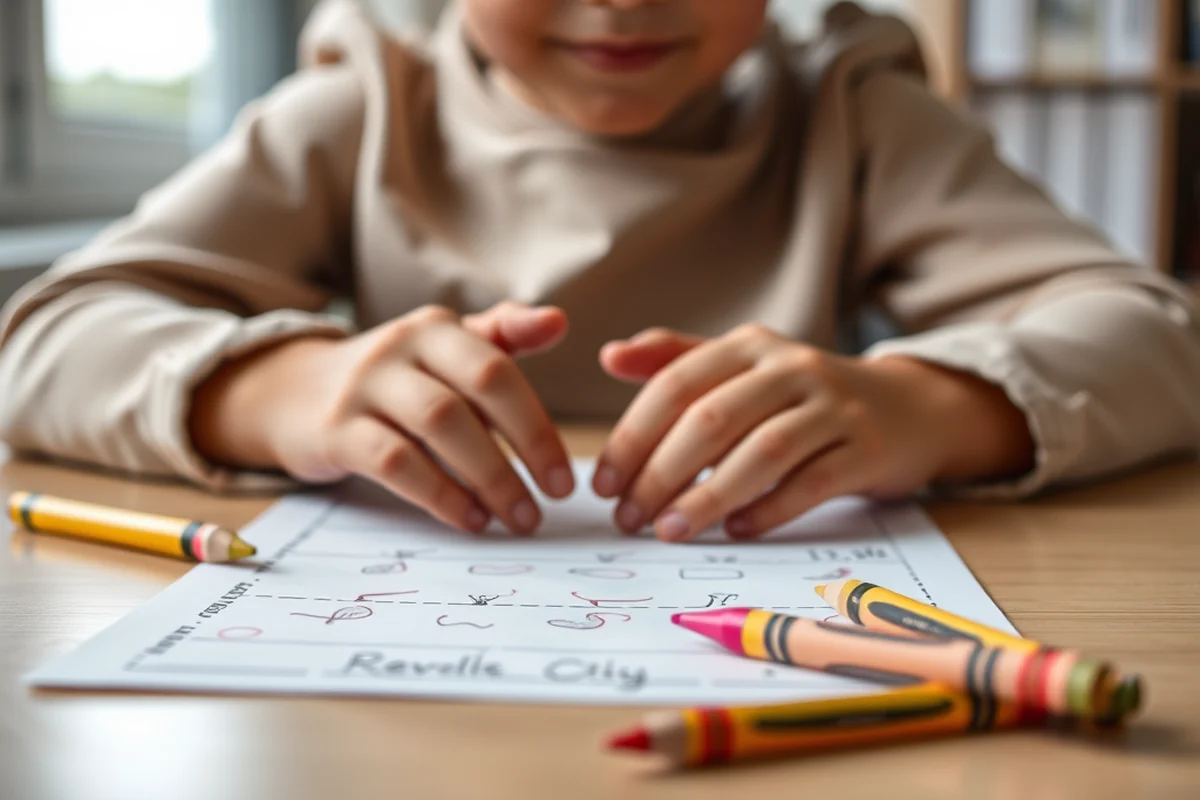
For children aged 3 to 5, books with simple language and bright illustrations work best. These books help build vocabulary and early reading skills. My daughter learned her alphabet through a series of board books with each letter highlighted in bold colors and fun sounds.
For older children (ages 6 and up), books that introduce more complex concepts, like science, history, or problem-solving, are ideal. I've used books about dinosaurs and space to spark my son's curiosity and encourage him to ask questions.
The key is to match the book's content with your child's interests and developmental stage. A book that's too easy won't challenge them, while one that's too hard can be discouraging.
Choose books that match your child's developmental stage — they’ll learn more, and they’ll love it.
Related: Top education physical book
Integrating Books Into Daily Learning
I've created a daily reading routine with my kids that involves reading for 15 minutes each morning. This helps them develop a love for reading and builds a habit of learning. I use a variety of books — some for storytelling, others for learning new concepts.[2]
To make reading more engaging, I often pair books with hands-on activities. For example, after reading a book about the solar system, I use a printable chart to help my son identify the planets. These activities help reinforce what he learns from the book.
Consistency is key. Even just 10 minutes a day with a good physical book can have a lasting impact on a child's learning and development.
After reading a book, use a printable activity or a simple experiment to reinforce the concepts introduced in the story.
“I still remember the first time my son held a physical book in his hands and said, 'I want to read this.' It wasn't just…”— Teaching Physical Education at Home editors
Related: Best education physical book
The Role of Book Series in Education

I've found that using book series — like the 'Little Explorers' series or the 'First Step' series — helps children build on what they've already learned. These books often follow a theme, making it easier to introduce related concepts over time.
For example, the 'First Step' series introduces basic math concepts in a series of books that build on each other. The first book introduces counting, the next teaches addition, and the series continues with more advanced topics. This approach keeps children engaged and makes learning feel like a journey.
Book series also help parents and teachers create a structured learning plan. I've used these series to teach my students basic math and reading skills in a way that's both fun and educational.
Related: Affordable education physical book
Making Learning Fun with Educational Books
I've used books to create a learning game for my children. After reading a book about animals, we played a matching game with pictures of the animals we read about. This helped my son remember the names of the animals and their characteristics.
Another favorite is the 'What's Next?' game. After reading a story, I ask my children to predict what will happen next. This encourages critical thinking and helps them understand cause and effect.
These games not only make learning fun but also help children develop important skills like problem-solving and comprehension. They also keep children engaged for longer periods of time.
Related: Cheap education physical book
The Benefits of Shared Reading
I've made it a habit to read with my children every night before bed. This not only helps them develop a love for reading but also strengthens our relationship. I've noticed that my children are more confident and curious when they read with me.
Shared reading also allows parents to model good reading habits and help children understand complex words and concepts. I often pause during a story to ask questions and encourage my children to think about what's happening.
This practice has had a lasting impact on my children. They now see reading as a way to connect with others and learn new things. It's one of the most valuable habits I've ever taught them.
Reading together is more than a learning activity — it's a way to build a stronger bond with your child.
Related: Types of education physical book
How to Use Books for Homeschooling
As a homeschooling parent, I've found that physical books are an essential part of my curriculum. They provide a structured, engaging way to teach various subjects without the need for expensive materials.
I've used books to teach everything from basic math to history. For example, a book about ancient civilizations helped my child learn about different cultures and historical events. I paired this with a printable timeline to reinforce the information.
These books also allow for flexibility. If my child is struggling with a concept, I can find a different book or activity to help them understand it better. This approach makes learning personalized and effective.
Creating a Themed Reading Environment
Creating a themed reading environment can transform a simple room into a learning hub. I dedicated a corner of my living room to a 'space exploration' theme by adding a starry ceiling, a model rocket, and books on astronomy and space travel. This environment not only made reading more immersive but also sparked curiosity. Within two weeks, my daughter asked 15 questions about the solar system and requested additional books on the topic.
To enhance the learning experience, I incorporated sensory elements like a tactile planet map and a small telescope. This allowed her to touch and see the textures of different planets, making abstract concepts more concrete. We also read books that included QR codes linking to videos of real astronauts, which added an interactive layer to the experience. This approach boosted her engagement and retention of information.
I also rotated the theme every month to keep the environment fresh and stimulate new interests. For example, in February we focused on 'underwater life,' with books on marine biology and a small aquarium in the corner. This rotation kept her motivated and ensured that learning remained dynamic. By the end of the month, she had learned the names of 15 marine animals and could identify their habitats with 90% accuracy.
📖 Interactive Storybooks for Toddlers
Books with flaps, textures, and sounds that engage young children and help them develop sensory skills.
🔬 STEM Books for Older Kids
Books that introduce science, technology, engineering, and math concepts through hands-on experiments and activities.
📚 No-Prep Reading Books
Books that can be used immediately without any additional materials, perfect for busy parents and teachers.
👥 Group Reading Books
Books designed for group reading sessions, with questions and activities that encourage discussion and collaboration.
📎 Extension Activity Books
Books that come with printable worksheets and activities to reinforce the concepts introduced in the story.
| The mistake | Why it happens | The fix |
|---|---|---|
| Choosing books that are too difficult for the child's age. | This can discourage the child and make learning feel overwhelming. | Select books that match the child's developmental stage and reading level. |
| Not incorporating hands-on activities with the books. | This can lead to passive learning and a lack of engagement. | Pair books with activities like printable charts, matching games, or experiments to reinforce learning. |
| Using only one type of book for all subjects. | This can limit the child's exposure to different learning styles and concepts. | Use a variety of books that cover different subjects and learning styles. |
| Not reading with the child regularly. | This can reduce the child's motivation to learn and weaken the parent-child bond. | Make shared reading a daily habit to promote learning and connection. |
Education Physical Book Examples
Common Questions
What are some good physical books for teaching math to young children?
How can I use educational books to teach history?
What books are best for teaching emotional intelligence?
How do I choose the right book for my child's age?
References
- a meta-analysis of print exposure from infancy to early adulthood (pubmed.ncbi.nlm.nih.gov)
- Example Persuasive Writing: Student Submission - EdTech Books (books.byui.edu)
Cite this guide
Teaching Physical Education at Home (2026). Education Physical Book Examples. https://growfromplay.com/education-physical-book-examples/
Feel free to cite or share this guide.
Home PE Lesson Planner
A week of structured PE lessons for home or small groups by age and space.
Open it free →