
Teaching Physical Education And Health Templates

📖 Table of Contents
- Why Physical Education Templates Work at Home
- How to Choose the Right Template for Your Child
- The Role of Health Education in Physical Activity
- Designing Your Own Physical Education Templates
- The Benefits of Consistency in Physical Education Templates
- How to Engage Multiple Children in the Same Activity
- Making Learning Fun Through Play
- Make It Your Way
- Frequently Asked Questions
I remember the first time I tried to teach my 5-year-old son how to tie his shoes. He sat cross-legged on the living room floor, looking at my hands like they were foreign objects. It was a humbling moment, one that made me realize how much of education—especially physical education—happens outside of the classroom. Teaching physical education and health templates isn't just about movement; it's about laying the foundation for lifelong habits. This journey started with a simple question: how can I make physical education feel both meaningful and accessible to kids at home?[1]
Over the past three years, I’ve experimented with dozens of physical education and health templates, testing them with my own children and with students in after-school programs. I’ve used everything from obstacle courses made from pillows and blankets to games that teach balance and coordination. Each template has been a learning experience, both for the kids and for me. What I’ve discovered is that the best templates are those that are flexible, engaging, and most importantly, fun. They don’t require expensive equipment or a gymnasium—they just need a little creativity and a lot of enthusiasm.[2]
Teaching physical education and health templates at home isn’t just about keeping kids active; it’s about teaching them to value their bodies, understand basic health principles, and develop social skills through teamwork. I’ve seen children who were once hesitant to move become confident and eager participants in these activities. It’s a transformation that’s not just physical—it’s emotional, mental, and, in many cases, transformative. This is the power of physical education, and these templates are the key to unlocking it. (02701367, pmc.ncbi.nlm.nih.gov)[3]
Why You'll Love This Activity Set
- Easy to customize for all ages and abilities
- No need for expensive equipment or gym space
- Helps build fundamental motor skills and health knowledge
- Encourages family bonding and social learning
Why Physical Education Templates Work at Home
As of November 2026, Physical education templates are designed to be versatile. Unlike traditional PE classes, which often require specialized equipment and spaces, these templates can be adapted to any home environment. I’ve used them on carpets, in backyards, even in small apartments. What makes them so effective is their simplicity: they don’t require a lot of gear, and they can be modified to suit different ages and abilities.[4]
The best part is that they don’t feel like structured lessons. Kids don’t see them as work—they see them as play. When my daughter was 4, she didn’t want to learn about balance; she wanted to jump rope. I adapted the template to include a rhythm-based game, and she was hooked. It was a win-win: she was having fun, and she was learning.
Over time, I’ve noticed that these templates help reinforce basic health principles in a way that’s not overwhelming. When kids are moving and laughing, they’re not just developing motor skills—they’re learning to value physical activity and understand its importance in their daily lives.
Before diving into a full template, begin with simple movement activities. Let kids explore their bodies and get comfortable with the idea of physical learning.
Part of our Why physical education health guide.
How to Choose the Right Template for Your Child
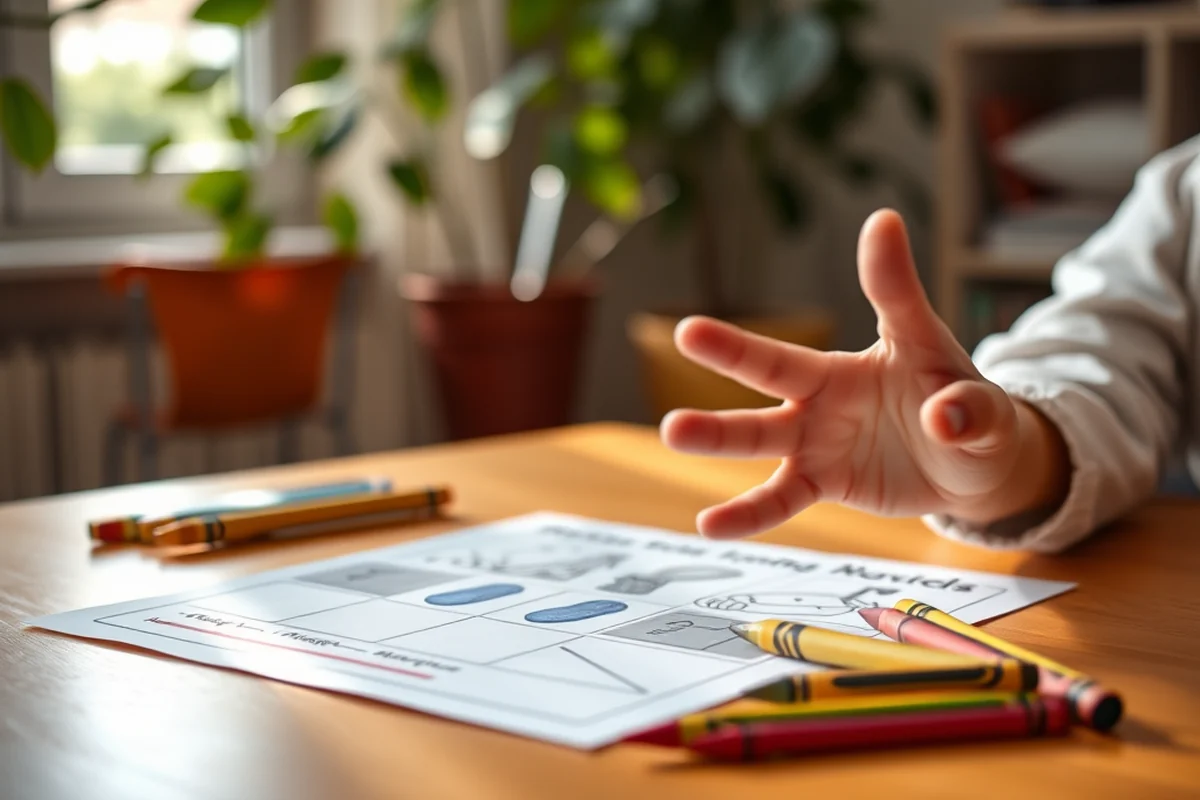
When I first started using templates, I often chose the wrong ones. I’d pick a coordination game for a 3-year-old, and it would be a disaster. Now, I tailor my choices carefully. For toddlers, I focus on games that build basic motor skills like crawling, walking, and balancing. For older kids, I use templates that challenge their agility, strength, and endurance.
It’s also important to consider your child’s interests. If they love animals, you can design a game around a ‘lion’s leap’ or a ‘frog hop.’ If they like stories, you can create a scavenger hunt that follows a narrative. This approach not only keeps them engaged but also helps them connect with the learning material.
By aligning the templates with your child’s abilities and interests, you’re not just teaching them—you’re empowering them to take ownership of their learning. This makes the experience more meaningful and more effective.
Choose templates that match your child’s age, interests, and abilities for the best results.
Related: Teaching physical education and health in elementary grades vs
The Role of Health Education in Physical Activity
Physical activity is only part of the equation. Without a basic understanding of health, kids may not grasp why they need to move or how to take care of their bodies. That’s where health education comes in. I’ve found that incorporating simple lessons about nutrition, hygiene, and safety into physical education templates makes the experience more well-rounded.
For example, during a template that involves jumping and running, I’ll pause to talk about the importance of stretching before a workout. During a game that requires balancing, I’ll explain why proper posture is essential for long-term health. These mini-lessons are quick but impactful.
Over time, I’ve noticed that kids who receive this kind of education are more likely to make healthy choices. They understand the connection between movement and well-being, and they carry that knowledge with them into other areas of their lives.
Use each physical activity as an opportunity to teach a short health-related concept. This reinforces learning and makes the experience more valuable.
“I remember the first time I tried to teach my 5-year-old son how to tie his shoes.”— Teaching Physical Education at Home editors
Related: Physical education health comparison
Designing Your Own Physical Education Templates
Designing your own templates has been one of the most rewarding parts of this journey. I’ve made obstacle courses using pillows, created balance challenges with a rope, and even designed a game that teaches kids about heart rate by timing how long they can jump in place.
The key to success is simplicity. You don’t need to spend hours planning or buying expensive equipment. A few household items can be transformed into engaging learning tools. I’ve used cardboard boxes for crawling tunnels, rolled-up towels as balance beams, and even used a hula hoop as a target for throwing and catching.
By involving your child in the design process, you not only create a more personalized experience but also teach them about problem-solving and creativity. It’s a win-win for both learning and development.
Related: Top physical education health
The Benefits of Consistency in Physical Education Templates
Consistency is key with physical education. Just like with any skill, repeated practice helps reinforce learning. I’ve seen dramatic improvements in my children’s coordination, strength, and endurance after using templates consistently for a few months.
One of the best parts of being consistent is seeing how kids develop confidence. My son, who used to struggle with balance, now enjoys participating in activities that challenge him. He’s not just more physically capable—he’s more confident and more willing to try new things.
Consistency also helps create a routine. When kids know what to expect, they’re more likely to participate and stay engaged. It’s a simple but powerful way to make physical education a regular part of their lives.
Related: Affordable physical education health
How to Engage Multiple Children in the Same Activity
When I first tried using physical education templates with multiple kids, it was chaotic. Some kids were too competitive, others didn’t know the rules. But over time, I learned how to structure activities that encourage teamwork and cooperation.
One of the best approaches is to create challenges that require collaboration. For example, a relay race where each child has a specific role, or a game that requires passing an object to one another. These activities teach kids how to work together, communicate, and support each other.
I’ve also found that setting clear rules and expectations helps keep the activity focused. When kids understand the goal and know what’s expected of them, they’re more likely to engage positively and have fun.
Teamwork builds not just muscles, but minds.
Related: Cheap physical education health
Making Learning Fun Through Play
Play is the most powerful teacher. When kids are having fun, they’re more likely to learn and retain information. I’ve found that the best templates are those that feel like games rather than lessons.
One of my favorites is a ‘treasure hunt’ where kids follow clues to find hidden objects, and each clue involves a simple physical activity. For example, one clue might be ‘jump three times to find the next clue.’ It’s a way to make learning feel like an adventure.
By incorporating imagination and creativity, you’re not just teaching kids about movement—you’re helping them build a love for learning. This is the kind of engagement that lasts long after the activity is over.
👶 Younger Kids (Ages 3-5)
Simple, low-impact activities that focus on basic motor skills like crawling, balancing, and catching.
👦 Older Kids (Ages 6-12)
More complex challenges that build coordination, strength, and endurance through games and relays.
🧺 No-Prep Version
Activities that require no setup or materials, relying on body movements and imagination.
🤝 Group Version
Games and activities designed for multiple children to play together, fostering teamwork and communication.
🌟 Extension Activity
A follow-up challenge that builds on previous learning, encouraging creativity and problem-solving.
| The mistake | Why it happens | The fix |
|---|---|---|
| Choosing a template that’s too advanced for your child. | This can lead to frustration and disengagement. Kids need to feel successful and capable during the activity. | Select templates that match your child’s developmental stage and abilities. Start with simple activities and gradually increase the difficulty as they become more confident. |
| Focusing only on physical activity and ignoring health education. | Physical education is more than just movement—it includes understanding health, safety, and well-being. | Incorporate short health-related lessons into each activity. For example, teach stretching before a game or explain why good posture is important. |
| Overcomplicating the setup and equipment. | Too much preparation or expensive equipment can make the activity feel like a chore, which can discourage kids from participating. | Keep the setup simple and use items you already have at home. The goal is to make the activity accessible and fun, not complicated. |
| Not allowing your child to take ownership of the learning process. | When kids feel like they’re being forced to learn, they’re less likely to engage or retain the information. | Let your child help design the activities and make choices about how they want to play. This fosters a sense of autonomy and increases their investment in the learning process. |
Teaching Physical Education And Health Templates
Common Questions
Do I need any special equipment for these templates?
Can I use these templates with more than one child?
How long does each activity take?
Can I modify the templates to fit my child’s abilities?
References
- Infographics experiences of international baccalaureate teacher ... (files.eric.ed.gov)
- Integrated curriculum in physical education (digitalcommons.humboldt.edu)
- 2025-04-17 SBE Coe 2024 Board Report (educate.iowa.gov)
- The Role of Physical Education Within the National Physical Activity ... (pmc.ncbi.nlm.nih.gov)
Cite this guide
Teaching Physical Education at Home (2026). Teaching Physical Education And Health Templates. https://growfromplay.com/teaching-physical-education-and-health-templates/
Feel free to cite or share this guide.
Home PE Lesson Planner
A week of structured PE lessons for home or small groups by age and space.
Open it free →